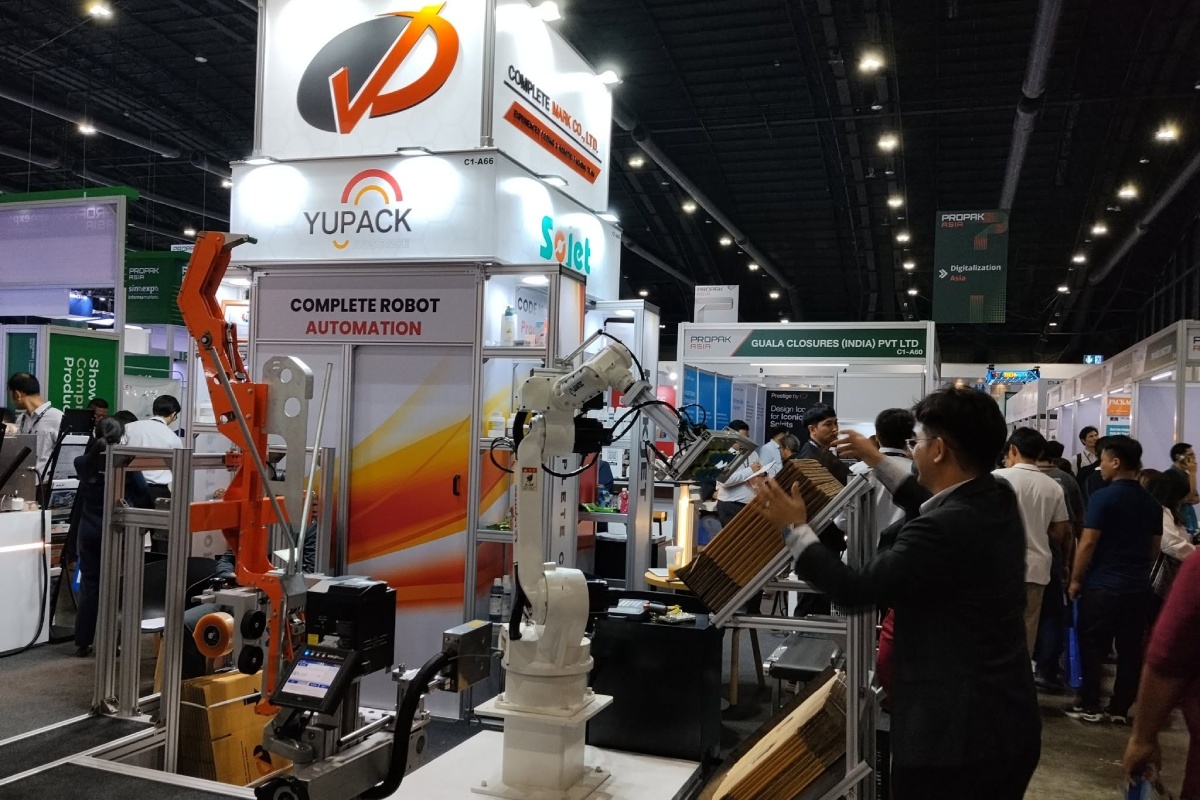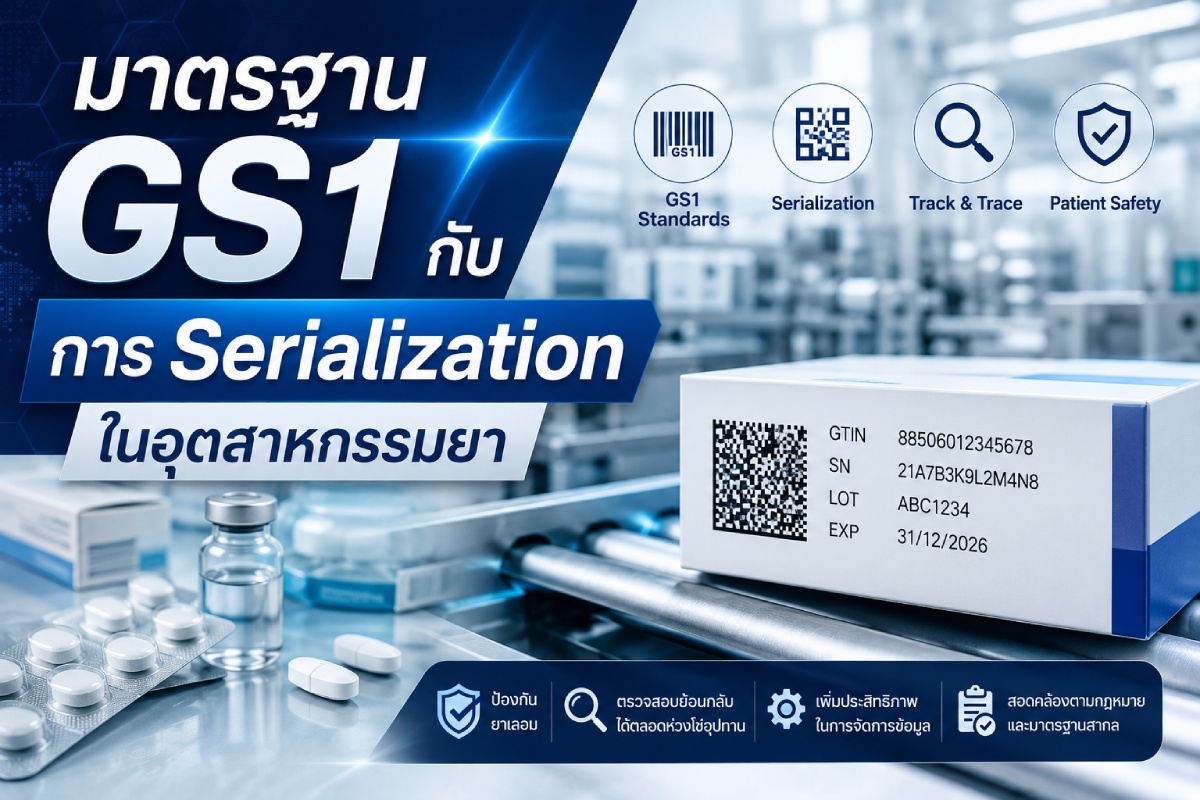
In today’s modern industrial manufacturing, printing data on products goes beyond just adding production dates or expiration dates. It also involves traceability, quality control, and compliance with customer requirements and international standards.
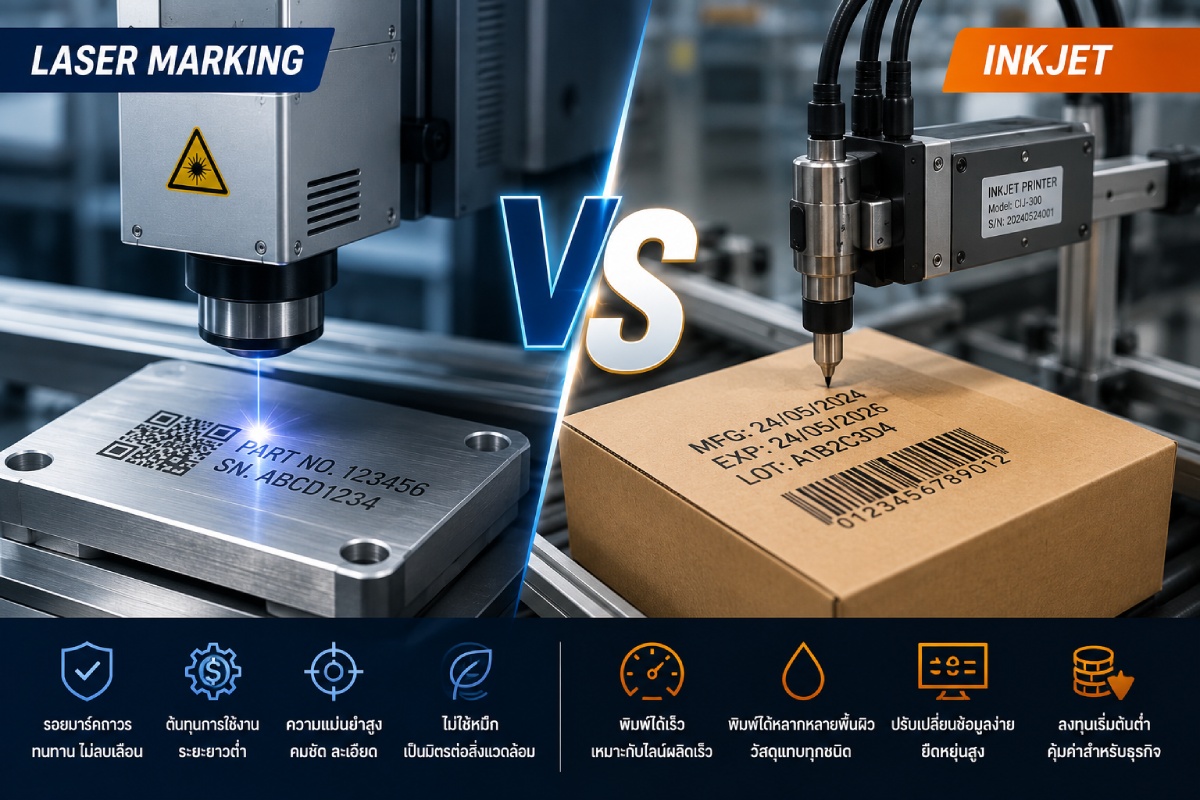
The two most popular technologies today are Laser Marking and Inkjet Printer (CIJ), each with its own strengths and limitations. Many factories often ask: “Which one offers the best return on investment?”
This article compares both systems across all dimensions to help you choose the printer that best fits your production line.
What is Laser Marking?
Laser Marking uses a high-power laser beam to create marks directly on the surface of materials — whether through etching, color change, or engraving — resulting in sharp, permanent data without the need for ink.
Laser Marking machines are commonly used with materials such as:
- Metals
- Stainless steel
- Aluminum
- Engineering plastics
- Electronic components
- Medical devices
- Automotive parts
The key advantage is the permanence of the data and virtually zero consumable costs.
What is Inkjet (CIJ)?
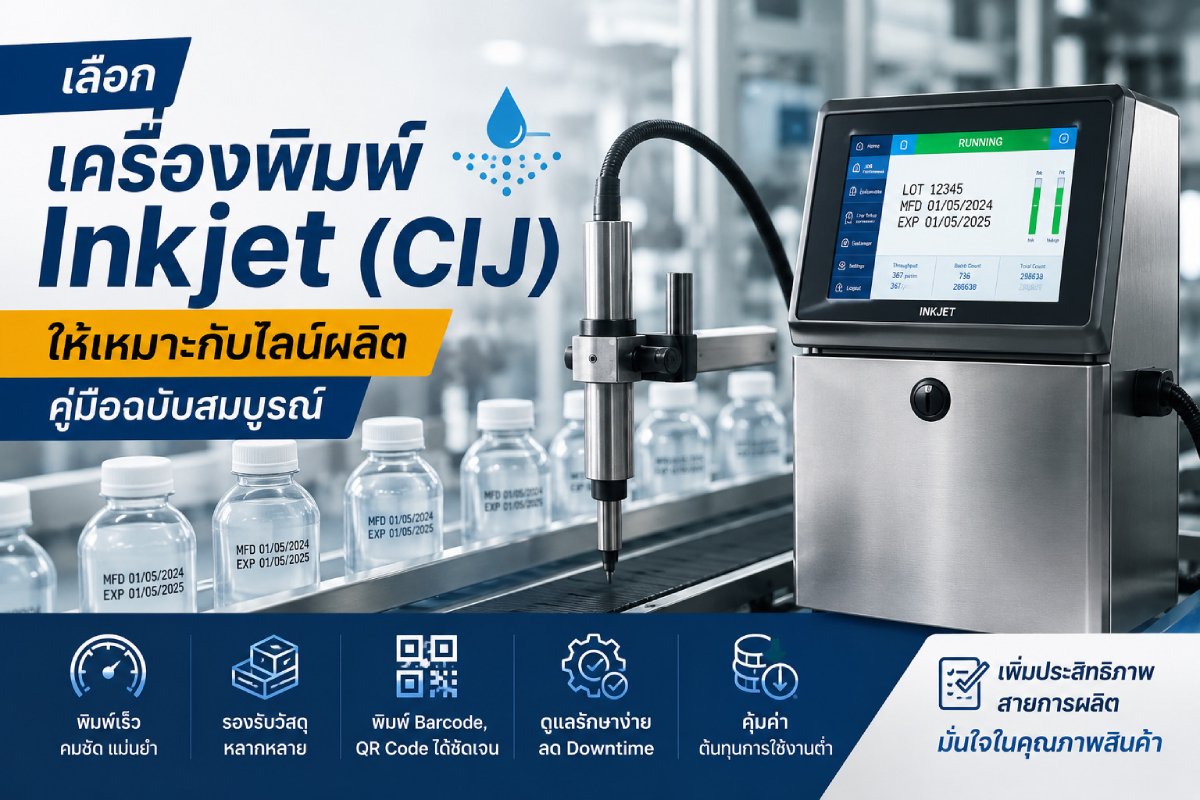
Continuous Inkjet (CIJ) is a continuous ink-jetting system that can quickly print text, numbers, barcodes, and QR codes on a wide variety of materials.
Suitable for: water bottles, cans, cardboard boxes, packaging film, plastic bags, and high-speed production lines. CIJ machines are the most popular choice in the food, beverage, cosmetics, and consumer goods industries.
Comparison Table
| Category | Laser Marking | Inkjet (CIJ) |
|---|---|---|
| Print Quality | Sharp and permanent | Sharp, depends on ink |
| Speed | High | Very high |
| Compatible Materials | Metals, select plastics | Almost any surface |
| Ink | None | Uses ink |
| Maintenance Cost | Low | Medium |
| Initial Cost | High | Lower |
| Long-term Cost | Low | Ink & solvent costs |
| Durability | Very high | Good, environment-dependent |
Investment Cost Comparison
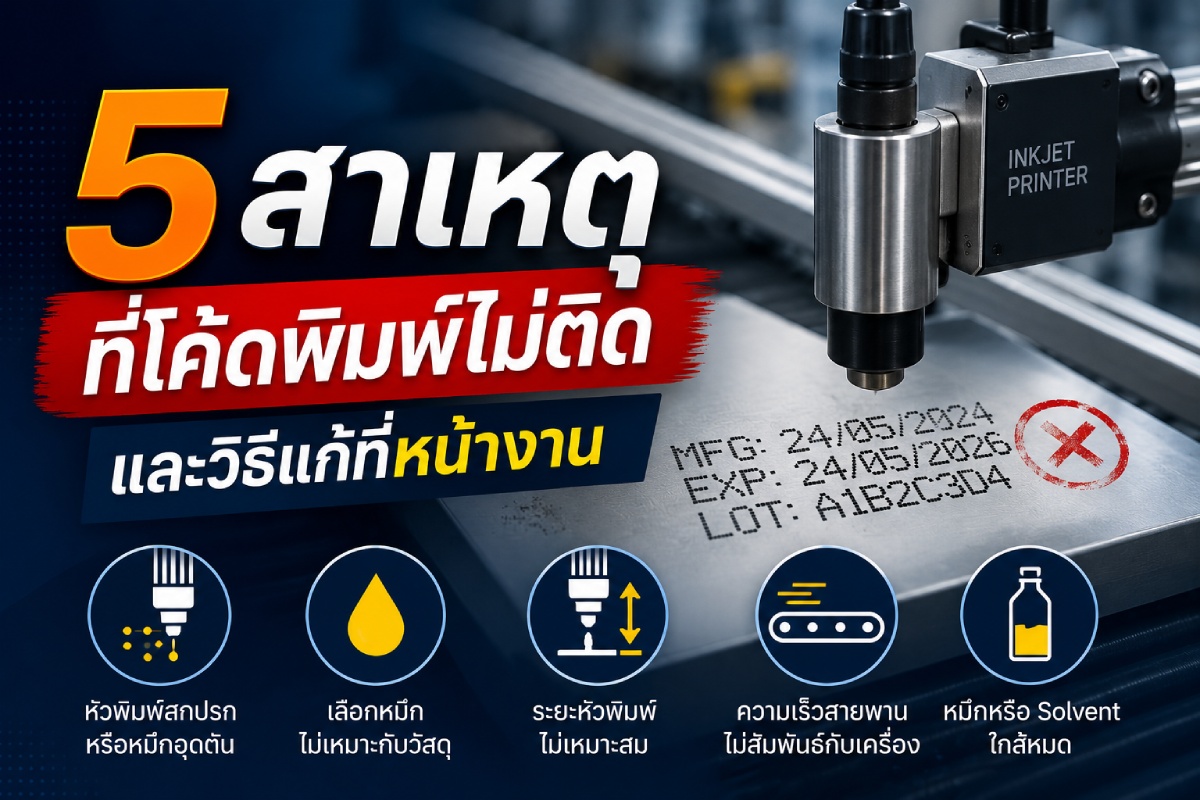
Inkjet: Low initial cost — ideal for small factories, startups, and limited budgets. However, long-term costs (ink, solvent, filters, spare parts, head cleaning) accumulate and may exceed expectations.
Laser: Higher upfront cost but zero ink/solvent expenses. For multi-shift continuous operation, laser machines typically deliver better long-term value.
Production Speed
Both systems support high-speed production lines. Inkjet has an edge for fast-moving packaging (water bottles, beverages, snacks, food). Laser excels at precision marking of industrial parts.
Data Permanence & Maintenance
Laser marks are permanent — resistant to heat, moisture, chemicals, and abrasion. Select the right type (Fiber, CO₂, or UV Laser) for your material. Inkjet marks may fade over time depending on environment and ink type.
Laser machines have fewer wear parts and no issues with clogged heads, dry ink, or solvent changes — reducing downtime significantly. Inkjet requires regular ink system maintenance.
Which One Should You Choose?
Choose Inkjet if: you want lower initial investment, print on varied packaging types, operate in food/beverage/FMCG, need frequent data changes, or produce high daily volumes.
Choose Laser if: you need permanent marks, want to eliminate ink, aim to reduce long-term costs, manufacture industrial parts, or require the highest print quality.
Summary
No single technology is best for every factory. If your priority is speed, flexibility, and low initial cost, Inkjet (CIJ) is the right fit. For permanent marks, zero consumables, and long-term ROI, Laser Marking wins.
Before investing, evaluate your product type, materials, line speed, budget, and Total Cost of Ownership (TCO) to find the solution that best fits your business.