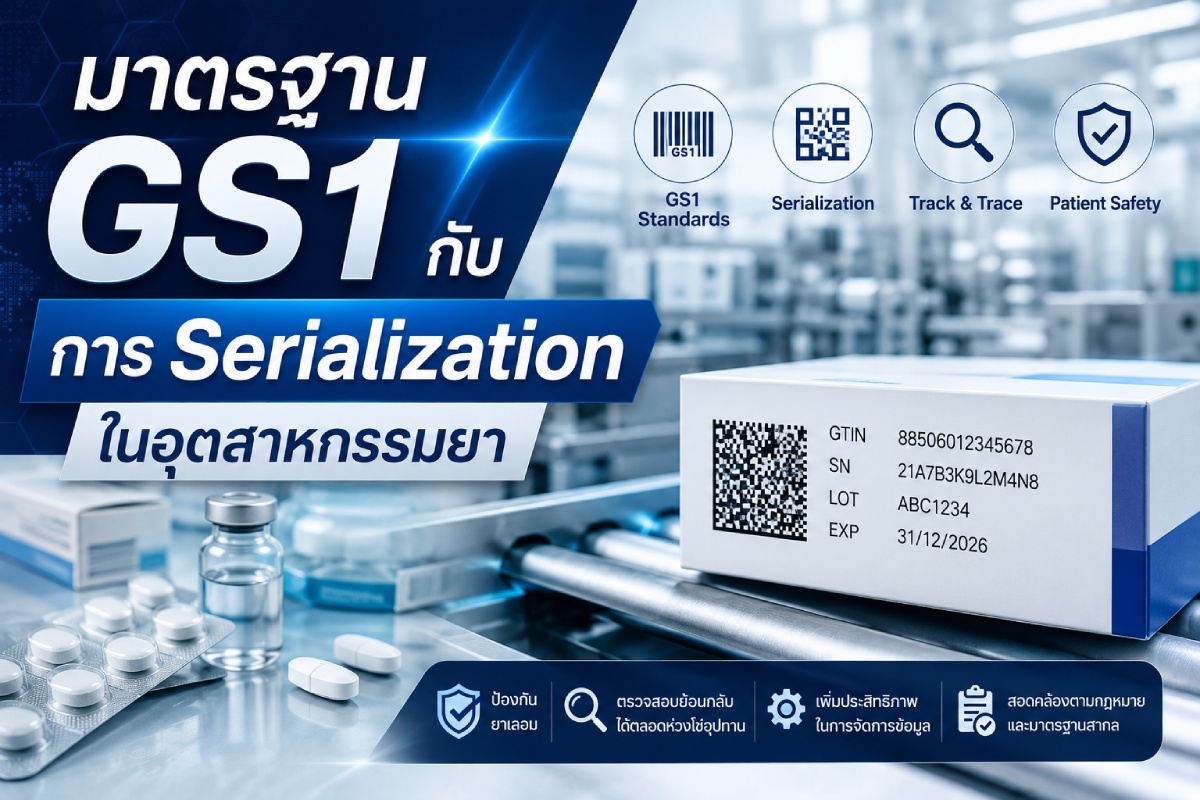
The pharmaceutical industry is one of the sectors that demands the highest standards of consumer safety and product traceability, as counterfeit drugs, illicit distribution, and supply chain errors can directly impact patient lives.
To address these challenges, many countries worldwide now require pharmaceutical manufacturers to implement Serialization using GS1 standards — enabling each individual medicine pack to be uniquely identified and tracked throughout the entire distribution chain.
This article explains what GS1 is, how Serialization works, and why both have become essential standards in today’s pharmaceutical industry.
What is GS1?
GS1 is an international standard for product identification and data exchange in supply chains, widely used across many industries including food, beverages, retail, logistics, and pharmaceuticals.
GS1 standards ensure that product data follows a consistent global format, reducing data exchange errors and enabling effective traceability. Key identifiers include:
- GTIN (Global Trade Item Number) — a unique product code
- GLN (Global Location Number) — a unique location identifier
- SSCC (Serial Shipping Container Code) — for tracking shipping containers
What is Serialization?
Serialization is the process of assigning a unique serial number to each individual product unit. In the pharmaceutical industry, every medicine pack receives a unique code stored in a GS1 DataMatrix, containing:
- GTIN
- Serial Number
- Lot Number
- Expiry Date
When scanned, the system can instantly identify whether the medicine is authentic, when it was manufactured, which batch it belongs to, and every point in the distribution chain it has passed through.
Why Does Pharma Need Serialization?
Counterfeit drugs are one of the most serious risks in the pharmaceutical industry. Serialization improves the ability to verify product authenticity and reduces the chance of counterfeit goods entering the market. It also enables rapid and precise product recalls when a batch issue is discovered.
Key benefits include:
- Prevention of counterfeit drugs
- Improved patient safety
- Full supply chain traceability
- Reduced distribution errors
- Compliance with regulatory requirements across multiple countries
What Data Does a GS1 DataMatrix Contain?
A GS1 DataMatrix is a 2D barcode designed to store more data than traditional barcodes. Common data elements include: product code (GTIN), Serial Number, lot/batch number, expiry date, and manufacturing date. When scanned, all this information is accessible instantly.
The Role of Vision Inspection
Printing the GS1 DataMatrix alone is not enough — if a code is unreadable or printed incorrectly, the entire traceability system can be compromised. That’s why Vision Inspection systems are installed on production lines to:
- Verify DataMatrix code quality
- Confirm text accuracy
- Check Lot Number and expiry date
- Validate Serial Number correctness
- Reject misprint products from the line
Choosing the Right Printing Technology for Serialization
Printers used in serialization systems must be capable of high-resolution printing and support real-time data changes. Popular technologies include:
- TIJ (Thermal Inkjet)
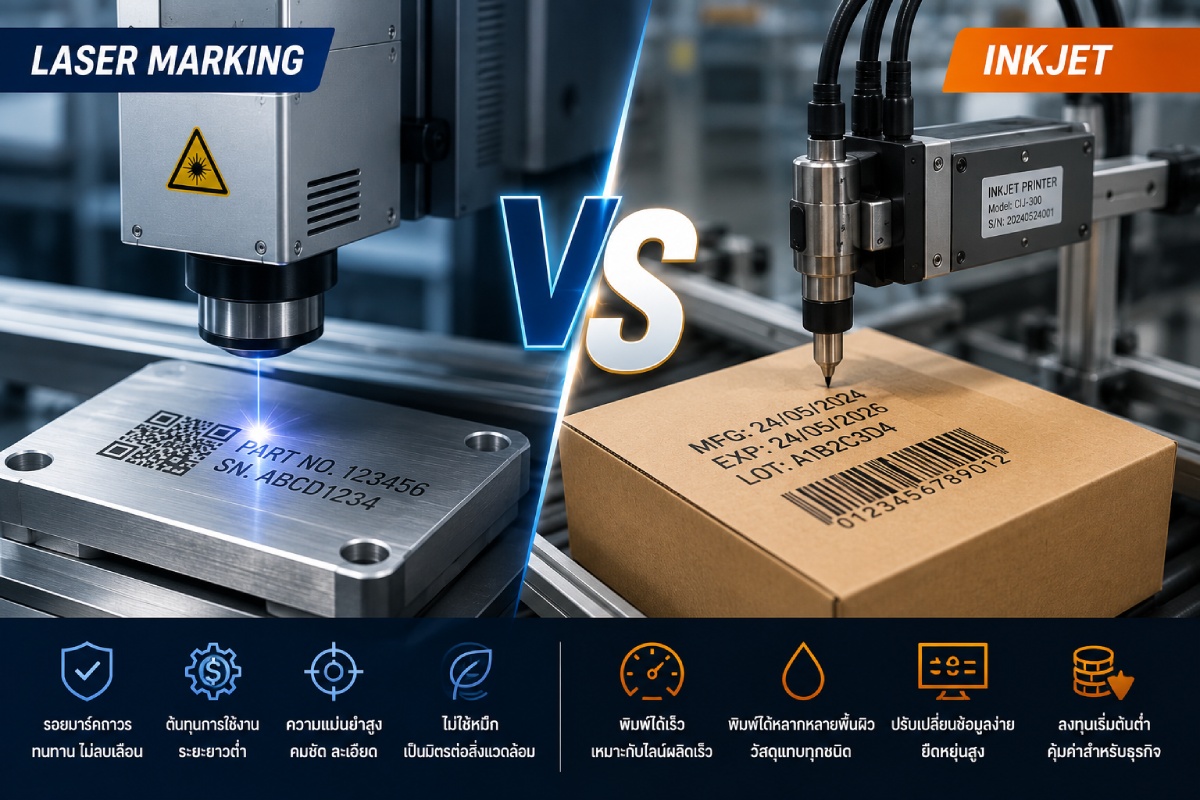
- Laser Marking
- Thermal Transfer
- High Resolution Inkjet
The right technology depends on packaging type, line speed, and customer requirements.
Benefits for Pharmaceutical Manufacturers
Implementing GS1 standards and Serialization goes beyond regulatory compliance — it also enhances supply chain management efficiency. Key benefits include: increased data transparency, reduced counterfeit risk, regulatory audit-readiness, more accurate product recalls, and the ability to identify and track each product unit precisely from production to end consumer.
Summary
GS1 and Serialization form the foundation of traceability in the modern pharmaceutical supply chain. When combined with technologies such as Vision Inspection, Laser Marking, and Track & Trace systems, they elevate product safety, reduce production errors, and support both domestic and international regulatory requirements.
For pharmaceutical manufacturers, investing in a Serialization system is not just about legal compliance — it is about building long-term trust with partners, distributors, and consumers.